Korean food demand looks very different once you are buying for resale rather than personal use. A consumer can swap brands or wait for a restock. A retailer, distributor or foodservice buyer cannot. If you want to understand how to source Korean pantry staples properly, the real question is not simply where to buy, but how to build a supply line that stays reliable when demand spikes, lead times shift and product trends move fast.
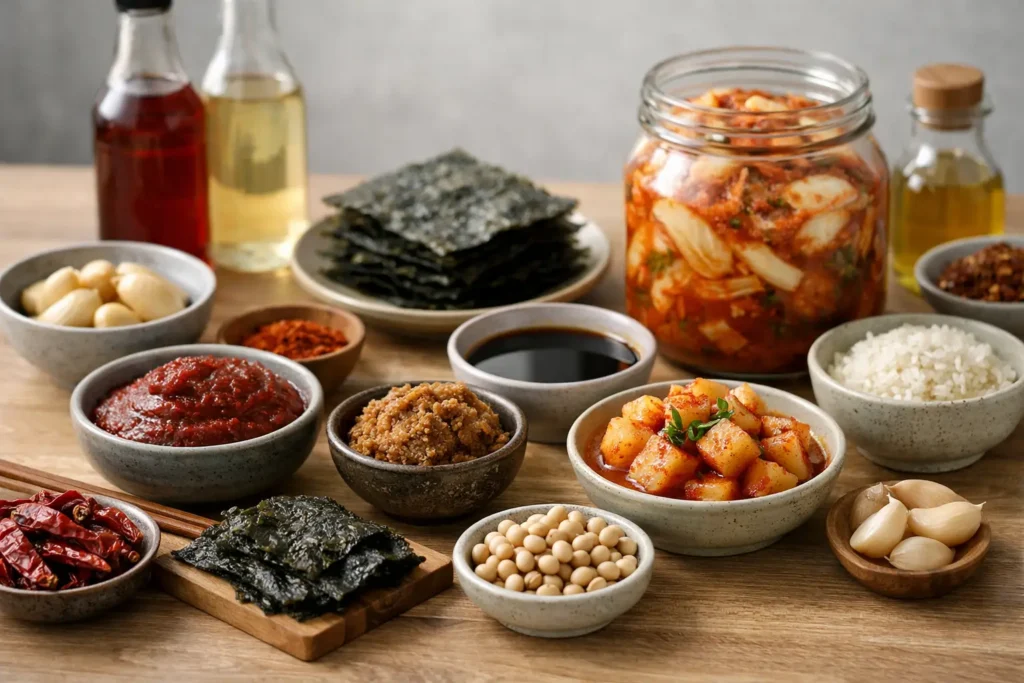
For commercial buyers, Korean pantry staples sit at the centre of repeat purchasing. Core lines such as ramen, gochujang, soy sauce, doenjang, kimchi seasonings, seaweed, noodle sauces and snack-adjacent cupboard products are not one-off novelty items. They drive ongoing sales, menu consistency and margin. That changes the sourcing criteria. Authenticity matters, but so do pack formats, shelf life, freight planning and the supplier’s ability to fulfil repeat bulk orders without friction.
How to source Korean pantry staples for wholesale
The first step is defining what “staples” means for your channel. A Korean supermarket range will need breadth across sauces, seasonings, noodles, ready-to-eat products and impulse lines. A mainstream grocer may need a tighter mix built around proven sellers with broad consumer recognition. A foodservice buyer will look for larger formats, stable pricing and products that work across multiple dishes.
This matters because overbuying niche lines can tie up cash, while underbuying hero products creates lost sales. In most cases, your starting range should combine high-velocity items with a smaller layer of discovery products. Ramen and hot chicken flavours often pull consumers in, but pantry retention usually comes from everyday essentials such as cooking sauces, soup bases, noodle accompaniments and condiments.
A practical sourcing plan usually starts with three filters: demand, repeatability and operational fit. Demand tells you whether the line already has market pull. Repeatability shows whether customers come back for it. Operational fit covers carton quantities, storage conditions, shelf life and the ease of importing the item into your market.
Start with demand, not just trend
Korean food trends create attention quickly, but not every viral product deserves a container slot. Buyers often make the mistake of sourcing only what is hot on social media. That can work for a short promotional run, but wholesale success usually comes from balancing trend-led products with pantry lines that continue to move after the hype slows.
Ramen is the obvious example. A recognised Korean noodle line can generate immediate interest, especially where spicy variants already have consumer awareness. But once shoppers arrive in store or online, they often add supporting pantry items – sauces, stir-fry seasonings, soup ingredients and snacks. That is where basket value improves.
For this reason, range building should follow consumption behaviour. Ask which products consumers use once, and which products they replenish. The latter should anchor your sourcing decisions. If you are supplying restaurants or casual dining operators, the same logic applies. Prioritise ingredients that can appear across several dishes rather than highly specialised products with narrow use.
Evaluate suppliers like a trade partner would
When considering how to source Korean pantry staples, supplier assessment is where most of the commercial risk sits. Price always matters, but low unit cost means very little if the supplier cannot maintain consistency, documentation or dispatch schedules.
A serious wholesale supplier should be able to confirm product origin, brand authenticity, case configuration, production lead times and export capability. They should also be comfortable discussing shelf life at departure, not just total shelf life on paper. That distinction is important for importers working with ocean freight or multi-stage distribution.
You also need clarity on whether the supplier is set up for wholesale-only transactions or operating as a retail seller trying to accommodate bulk requests. The difference shows up quickly in packing standards, quotation speed, account support and order reliability. A supplier built for B2B trade understands pallet efficiency, customs paperwork, mixed-container planning and replenishment cycles.
This is also where communication quality becomes a commercial factor. If a supplier is slow to answer pre-order questions, they are unlikely to become faster once stock is in transit. The best relationships are straightforward: clear catalogues, honest lead times, prompt confirmation of availability and practical support when shipment variables change.
Product authenticity is commercial, not cosmetic
Authenticity is often treated as a marketing phrase, but for B2B buyers it has measurable value. Genuine Korean pantry products carry brand recognition, trusted flavour profiles and stronger resale confidence. That affects shelf velocity and repeat order rates.
It also reduces the risk of customer disappointment. Retailers and foodservice operators buying Korean pantry lines are often serving consumers who already know what the product should taste like. If the item is a substitute, a reformulated private label or a poorly matched alternative, it may save money on paper but lose trust in practice.
This is especially relevant in high-recognition categories such as instant noodles, hot sauces and seasoned products where consumer expectations are already fixed. Known Korean brands help shorten the selling cycle because the product has built-in demand. In a wholesale environment, that can be more valuable than chasing the lowest possible ex-works price.
Build the right category mix
A good Korean pantry range should feel coherent, not random. Buyers often get better results when they source by use case rather than by catalogue order. Think in terms of cooking occasions and shopper behaviour.
A tight but commercially strong range might centre on noodles, cooking sauces, chilli pastes, soybean pastes, soup stock bases, seaweed products, seasoning powders and selected ready-to-eat or shelf-stable meal accompaniments. From there, snacks can support trial, while premium or specialist items can widen the offer for more engaged customers.
There is always a trade-off between breadth and efficiency. Too narrow, and you miss cross-sell opportunities. Too broad, and you create slow movers, fragmented inventory and avoidable storage costs. The right answer depends on your channel. A distributor serving Asian independents may justify a wider range than a supermarket buyer testing a Korean fixture in selected stores.
Compliance and labelling cannot be an afterthought
Importing Korean pantry goods into the UK or other international markets requires disciplined attention to product compliance. Ingredient declarations, allergen labelling, language requirements, packaging standards and customs classifications all need checking before purchase orders are finalised.
This is one area where experienced export suppliers make a clear difference. They understand that delays at the border can erase margin quickly. Missing documentation, incorrect labels or poorly prepared shipping paperwork can turn a commercially sound order into a costly problem.
Buyers should confirm regulatory suitability early, especially for products containing meat extracts, fermentation components or ingredients that trigger additional checks. Do not assume that a strong-selling item in one market will move smoothly into another. It depends on the product, the destination and the current rules in force.
Logistics decide whether your margin survives
Even strong products can become weak lines if logistics are handled badly. Freight mode, lead time, minimum order quantity and warehouse planning all shape landed cost. For pantry staples, this is not just about getting stock from A to B. It is about making sure stock arrives in saleable condition, with enough remaining shelf life and without tying up too much working capital.
Air freight can make sense for urgent replenishment or selected fast movers, but it rarely supports long-term margin on standard pantry lines. Sea freight usually offers better economics for bulk orders, though it requires stronger forecasting and more disciplined stock planning. Mixed orders also need care. Combining best sellers with slower items can improve shipment efficiency, but only if the slower lines still justify the space.
A dependable supplier should help buyers plan around these variables. That includes advising on case packs, recommending sensible order volumes and giving realistic timing rather than optimistic estimates. Companies such as SAMYANG FOODS STORE position themselves around this wholesale support model because buyers need more than a product list – they need execution.
How to source Korean pantry staples without creating dead stock
The safest approach is rarely the smallest first order, and it is not always the biggest either. If your trial order is too small, freight cost per unit rises and your data stays weak. If it is too large, you may spend months discounting stock that looked promising but lacked repeat demand.
A better route is staged scaling. Start with a commercially sensible range depth in proven categories, then expand once reorder patterns become visible. Watch what sells together. Watch what moves by region or account type. Pantry staples often reveal their value through repeat behaviour, not first-week excitement.
It also helps to align procurement with your sales plan. If a product requires education, sampling or menu development to move, factor that in before you order heavily. If it has immediate brand recognition, you may be able to support broader initial volume with less risk.
The buyers who do this well treat sourcing as an ongoing system, not a one-off purchase. They review landed cost, reorder timing, customer response and supplier performance together. That is usually what separates a Korean food range that grows steadily from one that starts loudly and stalls.
The opportunity in Korean pantry staples is real, but so is the need for discipline. Buy with demand in mind, partner with suppliers who understand export execution, and build a range that can be replenished as reliably as it can be sold. That is how growth becomes repeatable rather than accidental.
