Shelf space is expensive, and slow-moving stock ties up cash. That is why buyers keep asking which ramen sells fastest. The short answer is not simply “the hottest one” or “the cheapest one”. Fast sell-through usually comes from the right match between flavour profile, brand recognition, price point, format, and the channel you serve.
For importers, supermarket buyers, distributors, and foodservice operators, ramen performance is less about guessing trends and more about reading demand correctly. Korean instant noodles have moved well beyond niche Asian aisles. They now sit in mainstream grocery, convenience, online retail, and even menu development. Within that growth, some lines consistently outperform others because they are easy to recognise, easy to rebuy, and easy to merchandise.
Which ramen sells fastest by product type
In most export markets, spicy Korean instant noodles with strong brand recognition tend to sell fastest. That usually puts Buldak-style products, classic Korean soup ramens, and selected cup noodle formats at the front of the queue. But velocity changes by customer base.
In supermarkets, products with broad consumer awareness often move first. Buyers benefit from packaging that customers already know from social media, speciality food content, and repeat in-store exposure. That is one reason fire noodle lines and well-known Korean soup variants often generate quicker turnover than unfamiliar private-label alternatives.
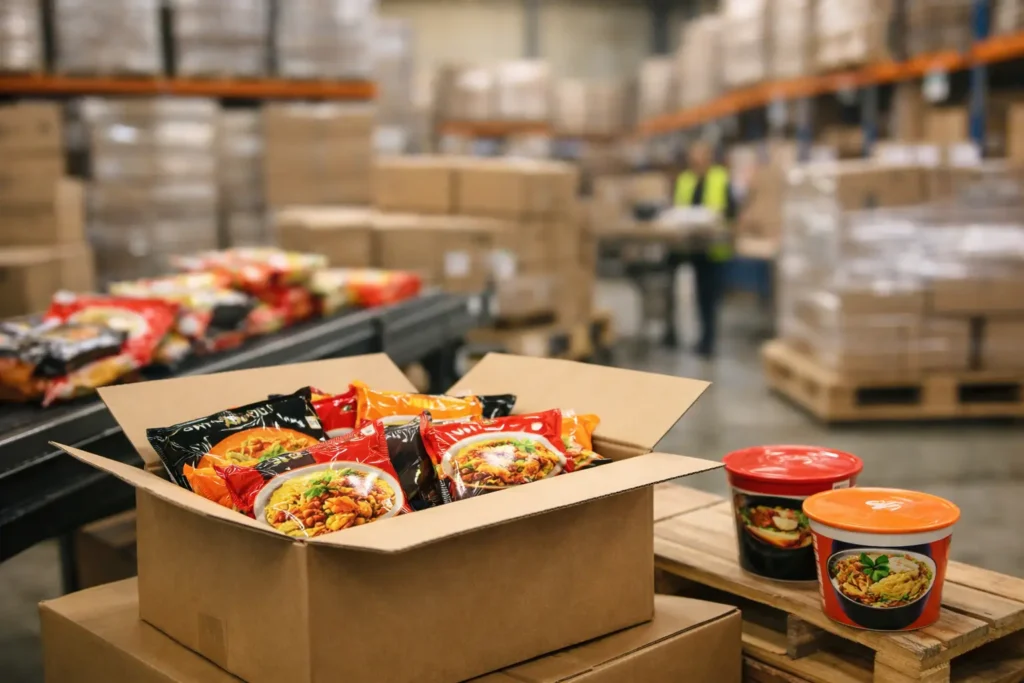
In convenience and small-format retail, cup noodles can outsell multipacks because they suit impulse purchase and immediate consumption. In wholesale distribution to ethnic grocers, larger pack formats and core staple lines may move faster because shoppers are buying for household replenishment, not trial. In foodservice, the fastest sellers are often the SKUs that give operators menu flexibility without adding preparation complexity.
The top commercial patterns behind fast-selling ramen
The fastest-selling ramen usually shares four traits. First, it has a clear point of difference. That may be extreme spice, a distinctive chicken flavour, a known Korean taste profile, or a recognisable format. If the customer understands the product in two seconds, the product has an advantage.
Second, it delivers repeat purchase. A novelty spike can create an initial rush, but long-term velocity comes from products shoppers buy again after the first trial. This matters for B2B buyers because reorder behaviour, not launch-week excitement, protects margin and stock flow.
Third, the packaging works hard. Strong visual identity matters in crowded shelves. Korean noodles that use bold colour, flavour coding, and simple product cues tend to perform better across mixed-language markets.
Fourth, supply consistency matters more than many buyers admit. A fast-selling ramen loses commercial value if replenishment is unstable. The best-selling line is not always the one with the loudest trend signal. It is often the one that combines demand with dependable availability.
Which ramen sells fastest in supermarkets and Asian grocery
For supermarket and Asian grocery channels, spicy dry noodles and core soup noodles usually lead. Dry stir-fried formats with a famous spice reputation often create faster first-time purchase because they have a built-in talking point. Shoppers recognise the challenge, the heat level, or the social buzz around the product.
That said, classic soup ramen often has stronger everyday repeat sales. Consumers may try a very hot noodle once, but they return more frequently to balanced beef, kimchi, seafood, or chicken-based soup profiles. This is where buyers need to separate fast launch sales from stable category performance.
A sensible wholesale mix is rarely one flavour only. The better approach is to carry one traffic-driving spicy hero line, one or two mainstream soup lines, and one accessible cup format. That combination captures trend-led shoppers, household staple buyers, and convenience customers at the same time.
Why Korean spicy ramen often leads on shelf velocity
Korean spicy ramen has a commercial advantage because it sells both as a food product and as a cultural product. Consumers buy it for taste, but also for familiarity with Korean brands, online content, and wider interest in Korean food. That extra layer of visibility lifts trial rates.
Among Korean noodles, Samyang-branded spicy lines are particularly strong because they combine authenticity, export recognition, and proven global demand. For wholesale buyers, that matters. You are not just buying a noodle. You are buying a SKU with established consumer pull.
Still, there is a trade-off. Extreme heat can limit the addressable audience. A very spicy line may turn quickly in urban, trend-aware retail and online channels, yet move more slowly in mainstream suburban stores. If your shoppers are broad family buyers, a moderately spicy or classic flavour often gives better sustained turnover.
Format matters as much as flavour
When buyers assess which ramen sells fastest, format deserves as much attention as flavour. A five-pack can be excellent for family shopping and pantry loading, but it is not always the best fit for convenience-led environments. Single packs are easier for trial. Cups are easier for impulse and office consumption. Bowls can support a more premium feel.
This has direct implications for wholesalers. If you sell into mixed accounts, the same flavour may need multiple formats. A top-performing noodle in multipack form may underperform in forecourt retail, where a cup version would move faster. Good buying decisions come from matching format to use occasion, not only from chasing a headline flavour.
Case size also affects commercial speed. Large cases can improve unit economics, but they may discourage smaller retailers from reordering quickly. Sometimes the faster seller is not the cheapest line on paper. It is the line that fits the buyer’s available shelf, cash position, and reorder rhythm.
Price point and margin shape sell-through
Fast sales are not only demand-driven. They are also margin-driven. If a retailer can price a ramen competitively while keeping a healthy return, the SKU has more room to move. This is especially relevant in markets where consumers compare Korean noodles against Japanese, local Asian, and mainstream instant noodle brands.
Premium branded Korean ramen can still sell quickly if the value story is clear. Consumers will often pay more for recognised authenticity, stronger flavour identity, and trusted quality. However, there is always a threshold. If landed cost pushes retail pricing too far above the category norm, even a trending line can slow.
For this reason, commercially strong ramen ranges usually include entry, mid, and premium options. Buyers who stock only premium heat-driven products may win attention but lose basket breadth. Buyers who stock only low-cost staples may miss the products that bring shoppers into the aisle in the first place.
How buyers should decide what to stock first
The best way to answer which ramen sells fastest for your business is to start with channel behaviour. Ask whether your customer is buying for novelty, daily consumption, convenience, or menu use. Then review three factors together: brand pull, flavour accessibility, and reorder practicality.
If you serve mainstream retail, start with recognised Korean branded lines that already have demand, then add one or two trend-led spicy variants. If you serve ethnic grocery, maintain staple soup flavours alongside the highest-visibility fire noodle products. If you supply foodservice, prioritise SKUs with consistent preparation, reliable supply, and flavour profiles that work as a base for added proteins, eggs, vegetables, or sauces.
It also helps to watch basket logic. Fast-moving ramen often sells alongside Korean sauces, seasonings, snacks, and ready-to-eat products. Buyers who think in category sets, rather than single SKUs, usually create stronger repeat sales across the whole Korean pantry section.
For commercial buyers seeking dependable access to authentic Korean noodles in bulk, working with a wholesale partner that understands both product demand and cross-border fulfilment is the real advantage. A fast-selling product is valuable. A fast-selling product that can be replenished on time is what supports long-term growth.
The strongest ramen range is rarely the one with the most flavours. It is the one built around proven demand, sensible format choices, and supply you can count on when the next reorder comes in.
