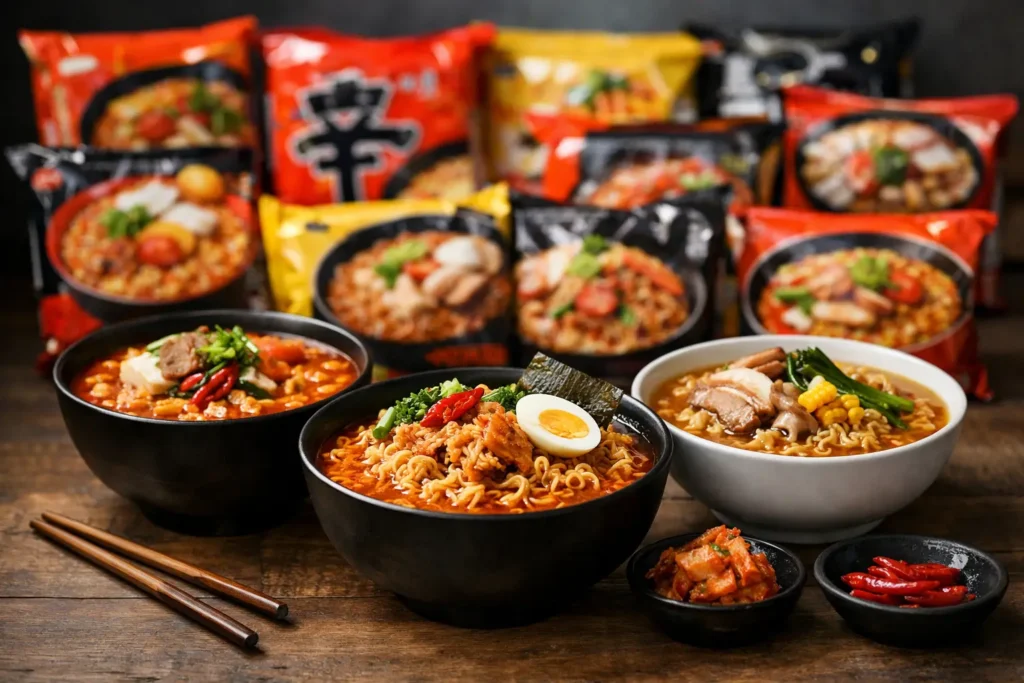
When a buyer asks which are the best Korean ramen brands, they are rarely asking for a casual opinion. They are asking which names move fastest, which lines generate repeat orders, and which products can hold up across retail, wholesale, and foodservice channels. In a market shaped by Korean food trends, social media demand, and rising interest in bold flavours, brand choice affects margin, shelf velocity, and reorder confidence.
For commercial buyers, the right answer depends on channel. A supermarket group may want recognisable names with broad appeal. A specialist importer may prioritise authenticity and range depth. A foodservice operator may care more about format, consistency, and case-level value. That is why a serious review of Korean ramen brands needs to look beyond popularity alone.
What makes the best Korean ramen brands stand out
The strongest Korean ramen brands tend to win on four commercial factors: brand recognition, flavour range, product consistency, and export readiness. A famous name can secure first-time purchase, but repeat sales depend on eating quality, sensible pricing, and dependable supply. If any one of those slips, even a trending line can become difficult to scale.
Packaging also matters more than many buyers expect. Clear flavour cues, strong visual identity, and recognisable Korean branding help products perform both in mainstream retail and specialist Asian grocery settings. Buyers serving mixed customer bases often need products that appeal to dedicated Korean food shoppers and first-time trial customers at the same time.
A final point is range architecture. Some brands are built around one hero SKU. Others support a full ladder of mild, spicy, premium, cup, multi-pack, and stir-fried formats. The broader the range, the easier it is to build basket size and respond to different customer profiles.
Best Korean ramen brands to watch in wholesale
Samyang
Samyang remains one of the most commercially significant names in Korean instant noodles. Its position is not based on heritage alone. It has built strong global demand through distinctive flavour development, high brand recall, and standout products such as Buldak Bokkeum Myeon, which turned extreme spice into a repeat-purchase category rather than a one-off novelty.
For wholesale buyers, Samyang offers an unusual balance. It has high-visibility lines that attract impulse purchases, but it also has enough depth to support long-term category planning. The Buldak range, in particular, performs well where shoppers actively seek trending Korean products, while classic ramen lines widen appeal beyond the heat-driven segment.
The trade-off is straightforward. Fast-moving spicy SKUs can be highly profitable, but market selection matters. In some channels, very hot products work best as part of a mixed range rather than the full assortment. Buyers who pair hero spicy lines with more approachable flavours usually create a stronger category overall.
Nongshim
Nongshim is one of the safest choices for broad-market distribution. It combines global recognition with flavours that are often easier for mainstream consumers to adopt, especially compared with brands centred on extreme heat. Shin Ramyun remains a benchmark product because it is bold without being too niche, and the wider portfolio includes premium, bowl, cup, and family-friendly options.
For supermarkets, convenience retail, and foodservice, Nongshim is often attractive because it supports scale. The brand has enough recognition to reduce the selling effort at store level, and it usually fits well in both ethnic aisles and general instant noodle sets. Where the goal is stable turnover with lower education cost, Nongshim is hard to ignore.
That said, its mainstream strength can also mean tighter competition. If every nearby retailer stocks the same core products, margin and differentiation may need support from pack formats or complementary Korean pantry lines.
Ottogi
Ottogi is a strong option for buyers who want a Korean ramen brand with broad food category credibility. Many consumers already know Ottogi from sauces, curry, sesame oil, and pantry staples, and that cross-category recognition can help noodle sales. Jin Ramen, in mild and spicy variants, is especially useful for buyers who want a more accessible entry point into Korean instant noodles.
Commercially, Ottogi works well in markets where shoppers are curious about Korean food but not necessarily committed to very hot flavours. It gives retailers a dependable middle ground – authentic Korean branding, recognisable quality, and easier household adoption. That can be valuable in regional supermarket groups and export markets where category education is still developing.
Ottogi may not create the same viral attention as some hotter competitors, but not every buyer needs virality. In many cases, steady repeat business is the better result.
Paldo
Paldo deserves attention from buyers who want variety and product personality. The brand is well known for lines such as Bibimmen and other differentiated flavour profiles that sit outside the standard spicy soup format. This makes Paldo useful for building a more interesting Korean noodle fixture, especially in specialist retail or among younger consumers looking for novelty.
Its strength is category diversification. If your current assortment is too dependent on red-broth spicy ramen, Paldo can help broaden the offer with refreshing, sweet-spicy, or seasonal appeal. That supports cross-selling and can reduce direct SKU overlap with larger competitors.
The commercial consideration is demand forecasting. Some Paldo lines are highly loved but more specific in taste profile, so ranging decisions should reflect local shopper data rather than headline popularity alone.
The Right mix matters more than one brand alone
Many buyers start by asking for a single winner among the best Korean ramen brands. In practice, the strongest ranging strategy is usually a portfolio approach. One anchor brand creates trust and fast turns. A second adds breadth. A third brings excitement or premium appeal. This structure gives retailers and distributors more resilience if one flavour trend slows.
A sensible example is to combine a high-demand spicy line, a mainstream soup ramen, and a milder everyday option. That mix gives broad customer coverage without overloading the category with near-identical SKUs.
How to choose the best Korean ramen brands for your market
Start with your customer base, not the supplier catalogue. If you serve Asian supermarkets or trend-led independents, shoppers may already know the leading Korean noodle brands and actively seek specific SKUs. In that case, authenticity and depth of range matter as much as price. If you serve mainstream grocery, a tighter selection of proven products often performs better.
Then review pack format. Multi-packs tend to suit supermarkets and high-frequency household buyers. Cups and bowls are stronger for convenience and travel retail. Foodservice may prefer products that can be customised on-menu or used as a base for add-on proteins and toppings.
Heat level should be treated as a commercial filter, not just a flavour choice. Extra-spicy products drive attention, but they do not suit every region or shopper profile. A category built entirely around heat can create trial, but not always repeat purchase. The best results usually come from balancing viral products with more accessible staples.
Supply consistency is equally important. Buyers need brands backed by reliable production, export handling, and clear case-level planning. A fast seller is only valuable if replenishment is dependable. This is where working with an experienced wholesale partner makes a real difference, especially when managing cross-border shipments and repeat orders.
Best Korean ramen brands for different business channels
For supermarket buyers, Nongshim and Ottogi are often practical starting points because they balance recognition and accessibility. For specialist Asian retail, Samyang and Paldo can add stronger differentiation and shopper excitement. For foodservice, the best choice depends on whether the noodles are sold as-is, upgraded on-menu, or used in promotional bundles.
Importers and distributors should also think beyond immediate sales. The best Korean ramen brands are often those that open the door to wider Korean pantry purchasing. Noodles can bring customers in, but sauces, seasonings, snacks, and meal accompaniments often raise account value over time. Buyers who build around brands with broader category pull usually create more durable commercial relationships.
This is one reason serious wholesale sourcing should not focus only on unit cost. Landed value includes fill rates, export documentation, product authenticity, and the ability to scale popular lines without disruption. A trusted global partner with bulk-only expertise can often protect margin more effectively than a cheaper but less reliable source. For buyers expanding Korean food ranges, that operational stability is often what separates short-term wins from sustainable growth.
The Korean noodle category still has room to grow in GB and international markets, but the winners will not be the buyers who simply chase whichever product is loudest online. They will be the ones who choose the best Korean ramen brands with discipline – matching demand, channel, pricing, and supply capability to build a range customers come back for.
