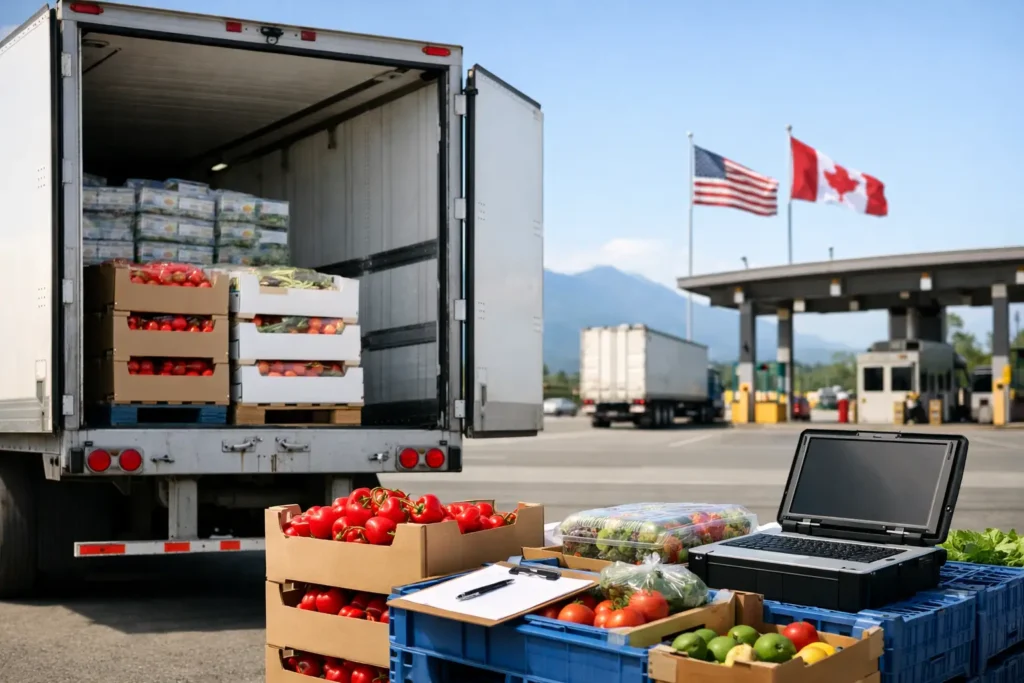
A delayed container of instant noodles is not just a shipping issue. For an importer, supermarket buyer, or foodservice distributor, it means missed promotions, empty shelf space, strained cash flow, and customers switching to whatever is available. That is why cross border food logistics matters far beyond freight. It sits at the centre of product availability, compliance, margin control, and repeat sales.
For buyers sourcing Korean food at scale, the stakes are even higher. Fast-moving lines such as ramen, sauces, snacks, and ready-to-eat meals depend on reliable replenishment and accurate documentation. Consumer demand can rise quickly, but if the logistics model is weak, growth becomes difficult to sustain. Strong demand alone does not protect a supply chain.
What cross border food logistics really involves
Cross border food logistics is the coordination of sourcing, packing, export handling, customs documentation, international freight, import clearance, and final delivery for food products moving between countries. In practice, it also includes stock planning, labelling compliance, shelf-life management, and contingency planning when timings shift.
For packaged Korean grocery products, this work is highly operational. Products must arrive in saleable condition, with the correct paperwork, suitable lead times, and enough remaining shelf life to support wholesale distribution or retail sell-through. If one part of the chain is weak, the cost shows up somewhere else, often through delays, storage charges, rejected goods, or rushed replenishment.
This is why experienced buyers do not judge a supplier only by product range or unit price. They also look closely at export readiness, responsiveness, and whether the supplier understands commercial delivery expectations in the destination market.
Why Korean food needs a tighter logistics model
Korean food continues to perform well internationally because it combines strong brand recognition with repeat-purchase potential. Products such as Samyang ramen and Buldak varieties already have proven traction in retail and foodservice. That creates opportunity, but it also raises expectations. Buyers need confidence that popular lines can be replenished consistently, not just sourced once.
Cross border food logistics for Korean pantry goods has a few specific pressures. Promotional spikes can be sharp. Mixed-category orders often include products with different carton sizes, packing requirements, and shelf-life profiles. Labelling and import rules can vary by market. A supplier that treats this like standard general merchandise often creates friction for the buyer.
A better approach is to build around predictable repeat ordering. That means clear lead times, sensible consolidation, disciplined document handling, and practical communication before goods leave origin. Wholesale buyers are not looking for vague promises. They need execution.
The risks buyers should watch early
Most problems in international food supply do not begin at customs. They start much earlier, usually during forecasting, product selection, or shipment preparation. An order may be commercially attractive on paper, but if shelf life is too short for the route, or if carton data is inconsistent, the issue appears later when it is more expensive to fix.
Documentation remains one of the biggest pressure points. Ingredient declarations, packing lists, invoices, origin records, and product specifications need to match the shipment exactly. Small discrepancies can delay clearance. For wholesale buyers with onward commitments, even a short hold can disrupt planned deliveries.
There is also the question of shipment structure. Full container loads may offer stronger freight economics for some buyers, while mixed loads or staged shipments may reduce stock risk for others. It depends on turnover speed, warehouse capacity, and how broad the SKU range is. The lowest freight rate is not always the lowest landed cost.
How to build a stronger cross border food logistics plan
The most reliable logistics plans start with demand reality, not freight theory. A buyer should know which products are core, which are seasonal, and which are promotional. That helps determine whether to prioritise speed, consolidation, or stock depth. High-velocity SKUs deserve a different replenishment rhythm from slower specialist lines.
Supplier alignment comes next. The right export partner should be able to confirm pack formats, pallet configuration, shelf-life standards, and documentation requirements before the order is finalised. This reduces rework and supports better forecasting on both sides. It also makes landed margin calculations more accurate.
Buyers should also think in terms of continuity rather than one-off shipments. A dependable supply programme usually includes reorder planning, acceptable substitution rules if a line is temporarily constrained, and enough communication to spot pressure before it becomes a shortage. In wholesale food distribution, predictability is commercially valuable.
Compliance is not a back-office detail
Food compliance can look administrative until a shipment is stopped, relabelled, or refused. For imported packaged food, requirements differ by destination, and they may change over time. A serious logistics process treats compliance as part of supply planning, not something to check once goods are already moving.
That includes product information accuracy, outer case identification, and any market-specific documentation needed for customs and food authorities. It also includes practical checks such as whether the remaining shelf life is acceptable for the buyer’s sales cycle. A product can be legally importable and still commercially unworkable if too much life has been consumed in transit.
For commercial buyers, this is where an experienced wholesale partner adds value. They do not simply dispatch goods. They help reduce avoidable risk before the consignment leaves the warehouse.
Transit time, shelf life, and margin are linked
One of the most common mistakes in cross border food logistics is treating transport and margin as separate decisions. They are not. A cheaper route that adds delay may create hidden cost through lower shelf-life value, slower sell-through, or emergency replenishment later. On the other hand, paying for the fastest possible movement on every order can erode margin if demand is stable and planning is strong.
The right balance depends on product type and market conditions. Instant noodles and dry pantry goods are generally easier to manage than chilled items, but that does not remove the need for discipline. Best-before windows still affect retail confidence, distributor uptake, and markdown risk. The commercial question is not simply whether the goods can arrive. It is whether they arrive in the right condition, at the right time, with enough sales life left to perform.
What dependable buyers expect from a supply partner
Professional buyers expect clarity. They want to know what is available, when it can ship, how it will be packed, what paperwork will be provided, and what happens if there is a disruption. This is especially true for importers and distributors serving multiple customers from a single inbound shipment.
A dependable partner should also understand that cross border logistics is part of sales performance. If a major Korean noodle line is unavailable during peak demand, the lost opportunity can be larger than the freight saving that caused the delay. Reliable execution protects revenue.
This is where a wholesale-focused exporter can make the difference. A business built around bulk supply, authentic sourcing, and international fulfilment is better placed to support repeat procurement than a seller designed for small parcel trade. For example, SAMYANG FOODS STORE operates with a wholesale-first model shaped around commercial buyers who need consistency, documentation control, and global delivery support.
A practical standard for cross border food logistics
Buyers looking to improve results should set a simple internal standard. Every supplier relationship should support five outcomes: authentic product access, commercially workable lead times, accurate export documents, acceptable shelf life on arrival, and responsive communication when conditions change. If one of those is missing, the supply chain will eventually feel it.
That standard also helps when comparing offers. A lower unit price may look attractive, but if the shipment structure is weak or the documentation process is inconsistent, the real cost can be higher. Strong procurement teams assess the full landed picture, including reliability and recovery speed when issues arise.
Cross border food logistics is not glamorous work, but it decides whether demand turns into repeat business. For Korean food buyers, that means choosing partners who can support growth with the same discipline they bring to sourcing. When the logistics model is right, products move on time, stock remains saleable, and expansion feels controlled rather than risky.
The best supply chains are not built on optimism. They are built on partners who make international food movement feel commercially dependable, order after order.

Pingback: How to Stock Buldak Flavours That Sell – SAMYANG FOODS STORE
Pingback: Samyang Wholesale vs Retail Explained – SAMYANG FOODS STORE