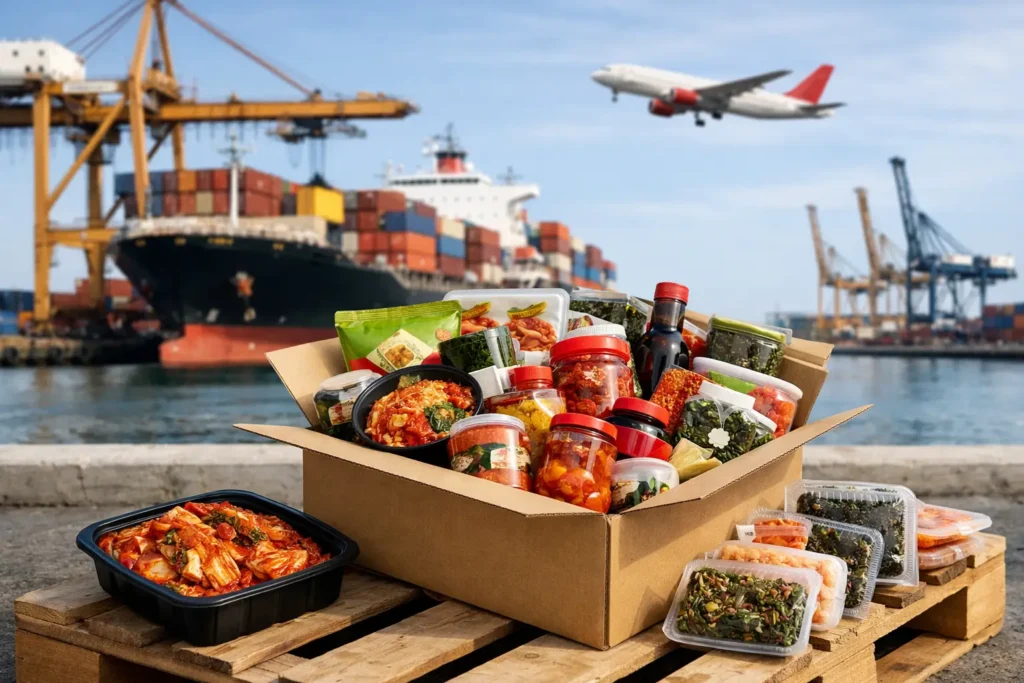
When a buyer adds Korean ramen, sauces, snacks, or ready meals to a wholesale range, the opportunity is obvious. What decides the result is execution. International shipping Korean food wholesale is not simply about moving cartons from Korea to another market. It is about protecting shelf life, maintaining product authenticity, meeting import requirements, and landing stock at a cost that still leaves room for margin.
For commercial buyers, that makes supplier choice a logistics decision as much as a product decision. Strong demand for Korean food can create fast turnover, but only if supply is consistent, documentation is accurate, and replenishment can keep pace with sales. A missed shipment, poor packing decision, or unclear lead time can turn a high-demand category into an operational problem very quickly.
Why international shipping Korean food wholesale needs a trade-first approach
Korean food performs well internationally because it combines brand recognition with repeat purchase behaviour. Consumers who buy instant noodles, hot chicken flavours, gochujang-based sauces, seaweed snacks, and pantry staples often return for the same products again. For importers, distributors, supermarkets, and foodservice groups, that repeat demand creates a strong commercial case.
But the shipping side is less straightforward than many first-time buyers expect. Different categories move differently. Dry noodles and snacks are relatively simple compared with products that have shorter shelf-life sensitivity, labelling issues, or country-specific compliance requirements. Even within packaged grocery, outer carton strength, pallet build, temperature exposure, and port handling can affect arrival quality.
This is why experienced wholesale buyers do not evaluate a Korean food supplier on product catalogue alone. They assess whether the supplier understands international documentation, export packing, mixed-SKU consolidation, and the realities of cross-border replenishment. A low quoted unit cost means very little if the shipment arrives late, incomplete, or unfit for retail distribution.
What serious buyers should expect from a wholesale partner
A dependable partner in international shipping Korean food wholesale should be able to support both commercial growth and operational control. That starts with authentic sourcing. In Korean food, authenticity matters because end customers often know the brands they want. A substitute product may fill shelf space, but it does not always match demand or pricing power.
Buyers should also expect clarity around MOQ, lead times, carton configuration, and export readiness. Wholesale purchasing is not retail ordering at a larger volume. It requires planning at pallet or container level, understanding the best product mix for each shipment, and balancing fast sellers with strategic range expansion.
Account support is another practical differentiator. Commercial buyers often need answers on HS codes, packing lists, product specs, and shipment timing before they can confirm an order internally. Delayed communication creates purchasing friction. Responsive support shortens decision cycles and reduces avoidable errors.
Product categories that travel well in bulk
Not every Korean food category behaves the same way in export trade, but several categories consistently suit bulk international distribution. Instant noodles remain one of the strongest performers because they combine proven consumer demand, straightforward handling, and broad retail appeal. Well-known lines such as Samyang Ramen and Buldak Bokkeum Myeon can work across supermarkets, specialist Asian retailers, online resellers, and foodservice wholesalers.
Sauces and seasonings also travel well when packed correctly and supported with accurate product data. These products often offer strong repeat sales because customers come back once they have incorporated them into regular cooking habits. Snacks can perform especially well for impulse purchase channels, although buyers need to pay closer attention to crushing risk and presentation quality on arrival.
Ready-to-eat packaged meals can be commercially attractive too, but they require a more careful review of shelf life, destination-market acceptance, and stock rotation expectations. The right category mix depends on your route to market. A supermarket group may prioritise broad family-friendly SKUs, while a distributor serving independent Asian grocers may pursue hotter flavours, limited ranges, and trend-led items.
Shipping decisions that affect landed margin
In wholesale trade, profit is shaped long before the goods reach the shelf. Freight mode, load efficiency, and replenishment planning all influence landed cost. A buyer chasing the fastest possible shipment every time may protect availability, but repeated use of higher-cost freight can compress margin quickly. On the other hand, ordering too conservatively can create stock gaps that hand sales to competitors.
The right balance depends on order volume, sales velocity, and how predictable your replenishment cycle is. Full container ordering tends to improve freight economics, but it only works if demand justifies the stock position. Mixed loads offer flexibility, especially for buyers testing range breadth, though they can come with a slightly higher per-unit logistics cost.
Packing discipline matters as well. Well-structured export cartons, sensible palletisation, and accurate loading plans reduce the risk of transit damage and warehouse inefficiency. These details are not glamorous, but they directly affect what the buyer can sell on arrival.
Compliance is not optional
One of the biggest mistakes in international shipping Korean food wholesale is treating compliance as an afterthought. Product demand does not override import rules. If the shipment lacks the right paperwork, country-specific labelling, or ingredient clarity, delays and added costs follow.
Buyers need to confirm in advance what is required in the destination market. That may include commercial invoices, packing lists, certificates, ingredient declarations, and retail-ready labelling standards. The exact requirements vary by country, and there is no universal shortcut. What clears smoothly in one market may need adjustment in another.
This is where a supplier with real export experience earns its value. Good support helps the buyer spot issues before dispatch rather than after container arrival. Preventing one customs hold can protect far more margin than negotiating a slightly lower unit price.
Demand is strong, but range planning still matters
Korean food has moved beyond niche status in many markets, yet buyers still need discipline in SKU selection. Trending products can drive traffic, but overexpansion creates slow-moving stock. A better approach is to build the range around proven anchors, then add selective supporting lines.
For many importers, that means leading with recognised noodle products, supported by sauces, seasonings, and snack lines that increase basket value. Foodservice buyers may take a different route, favouring back-of-house pantry essentials and pack formats suitable for kitchen use rather than shelf display.
The point is not to buy the widest possible assortment. It is to buy the right assortment for your channel, customer profile, and replenishment model. A strong supplier should help buyers think commercially about that mix rather than simply offering more SKUs.
Reliability beats one-off pricing
In B2B food import, the cheapest offer is rarely the strongest offer. A reliable supply partner protects continuity, which is often worth more than a small saving on paper. If a buyer wins a better initial price but loses weeks to communication delays, substitutions, poor shipment planning, or inconsistent fulfilment, the real cost becomes obvious.
Long-term procurement works better when both sides understand repeat ordering. That means realistic forecasting, visibility on production and dispatch timing, and a willingness to solve problems before they affect downstream sales. Buyers scaling Korean food ranges need that consistency because promotional planning, retailer commitments, and customer confidence all depend on stock reliability.
This is why many serious buyers prefer wholesale-only specialists with export capability rather than general traders. A focused B2B model is more likely to support volume planning, account service, and operational follow-through. For buyers seeking authentic Korean food at scale, businesses such as SAMYANG FOODS STORE are positioned around exactly that expectation: bulk supply, recognised Korean product lines, and logistics support built for repeat international trade.
Choosing a partner for international shipping Korean food wholesale
The right question is not simply, can this supplier export? The better question is, can this supplier help my business grow the category without creating avoidable supply risk? That means looking at sourcing credibility, export experience, responsiveness, category strength, and their ability to support commercial ordering decisions.
It also means accepting that there are trade-offs. The widest range is not always the fastest to replenish. The lowest MOQ is not always the best landed-cost option. The fastest route is not always the most profitable one. Strong wholesale buying comes from balancing those variables with clear market demand and realistic operational planning.
Korean food remains one of the more attractive packaged grocery categories for international growth, but success depends on disciplined execution behind the scenes. Buyers who treat logistics, compliance, and replenishment as part of the product offer tend to build stronger results over time. If your next shipment needs to do more than arrive – if it needs to arrive accurately, competitively, and ready to sell – that is where the right wholesale partner proves its worth.
