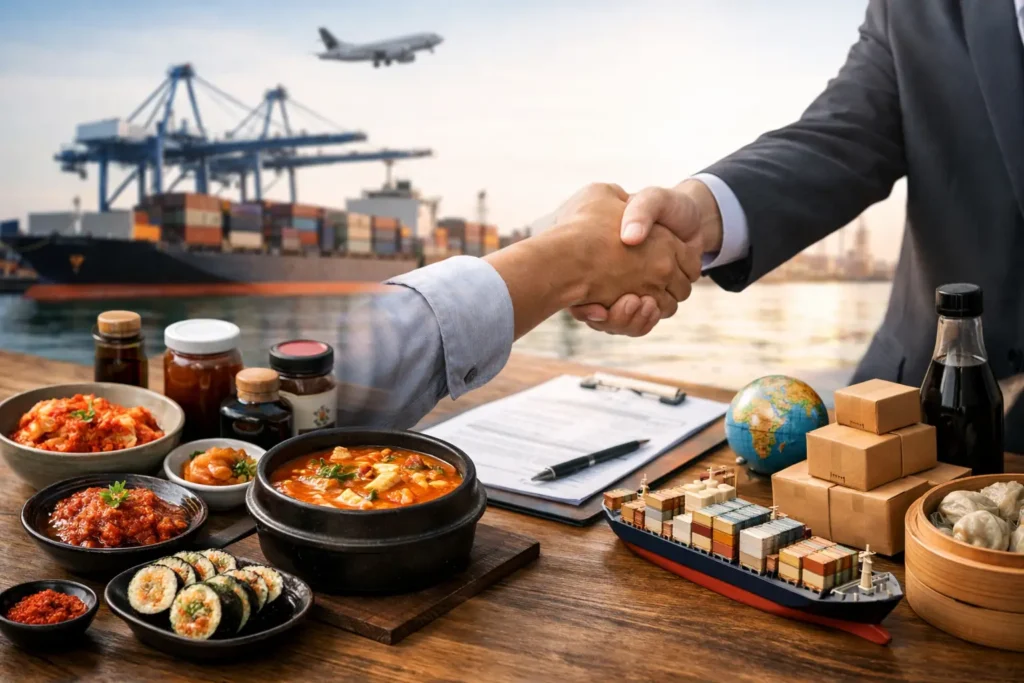
A fast-selling Korean line can lift basket size, refresh your category mix and bring in repeat customers – but only if supply holds up. That is why choosing an authentic Korean food exporter is not a branding exercise. It is a commercial decision that affects stock continuity, import compliance, margin control and customer trust.
For wholesalers, supermarket buyers, distributors and foodservice operators, the real question is not simply where to buy Korean products. It is who can supply genuine products at scale, ship them reliably across borders and support repeat ordering without friction. When Korean food demand is driven by recognisable brands, viral products and strong consumer expectations around taste, packaging and origin, the exporter you work with becomes part of your growth model.
What an authentic Korean food exporter should actually deliver
Authenticity matters because customers can tell the difference. In retail, shoppers looking for Korean instant noodles, sauces and snacks often want the exact products they have seen online, tasted before or actively searched for by name. In foodservice, chefs and operators need flavour consistency. If the heat level, seasoning profile or product format changes, menu execution suffers.
An authentic Korean food exporter should therefore offer more than a catalogue with Korean-style products. The standard should be clear – genuine Korean brands, commercially viable case quantities, dependable packing and a supply chain built for international trade. For B2B buyers, authenticity and reliability are closely linked. A product may be genuine, but if lead times are unstable or fulfilment is inconsistent, it still becomes a sourcing risk.
The strongest exporters combine direct sourcing confidence with practical wholesale support. That usually includes bulk ordering structures, export-ready documentation, coordinated logistics and account support from teams who understand both the product and the destination market.
Why authenticity affects commercial performance
Korean food has moved beyond a niche import category. Buyers are now dealing with established demand patterns, not just trend-led trial. Products such as Korean instant noodles, hot chicken ramen, gochujang-based sauces, seasoning mixes, snacks and ready-to-eat meals can generate strong turnover when they are the right brands and the right pack formats.
That demand creates a simple commercial reality. If customers expect Samyang Ramen or Buldak Bokkeum Myeon, a substitute may not perform in the same way. Shelf velocity often depends on name recognition, visual familiarity and the credibility of country-of-origin cues. When buyers stock authentic Korean products, they are not only meeting demand. They are reducing the risk of slow-moving alternatives that lack consumer pull.
There is a trade-off, of course. Well-known products can be more competitive to source, and some lines face periodic pressure from sudden demand spikes. That is why exporter selection matters. A serious trade partner should be able to guide buyers towards a balanced range – fast movers for volume, complementary pantry items for basket growth and replenishment planning that reflects real market conditions.
How to assess an authentic Korean food exporter
Price matters, but on its own it is not a buying strategy. The more useful test is whether an exporter can support your business over repeated order cycles. That means looking at sourcing credibility, operational discipline and commercial fit.
Start with product range. A capable exporter should not only carry headline items but also the surrounding categories that help you build a stronger Korean food programme. Instant noodles may drive first interest, yet sauces, seasonings, snacks and ready meals often help increase average order value and improve account stickiness. If you are buying for retail, range breadth supports merchandising. If you are buying for foodservice or distribution, it helps consolidate procurement.
Then look at bulk capability. Some suppliers present themselves as wholesalers but operate with retail-style inventory logic. That creates problems once order size increases. A true B2B exporter should be structured for case quantities, pallet-level movement and repeat commercial supply. Buyers should be able to discuss minimum order volumes, mixed container options, restocking patterns and lead-time expectations in practical terms.
Logistics support is the next filter. Exporting food is not just about dispatching cartons. It involves documentation, route planning, transit coordination and clear communication around timing. Delays can happen in international trade, but poor visibility is harder to excuse. An exporter that understands cross-border execution should be able to provide realistic timelines rather than optimistic ones.
The categories that usually matter most
For many buyers, Korean instant noodles remain the entry point because demand is broad, repeat purchase is strong and branded lines are highly visible. Spicy noodle products in particular have moved from novelty to staple in many international markets. That makes them commercially attractive, but it also means buyers need continuity of supply.
Sauces and seasonings are often the next growth layer. They work well in both retail and foodservice because they carry the flavour identity of Korean cooking without the complexity of chilled distribution. Gochujang-based products, soup bases, marinades and dry seasonings can help buyers expand beyond impulse snack purchasing into pantry staples and recipe-led sales.
Snacks and ready-to-eat items add range diversity, especially in markets where Korean pop culture has increased trial and awareness. These categories can perform well, but demand can be more trend-sensitive than core pantry lines. A good exporter should help buyers judge which lines are likely to hold repeat demand and which are better treated as promotional or seasonal opportunities.
Red flags buyers should not ignore
The first red flag is vague sourcing language. If a supplier talks about Korean-style products but is unclear about brand provenance, manufacturing origin or product authenticity, caution is sensible. Buyers operating at scale need confidence in what they are importing, especially when end customers expect specific brands.
The second is inconsistency in communication. Slow replies, uncertain stock visibility or unclear shipping details often point to wider fulfilment issues. In wholesale trade, communication is part of service reliability. Procurement teams need accurate answers to make inventory decisions.
The third is a mismatch between promise and infrastructure. Some suppliers can handle small opportunistic orders but struggle with repeat container business or multi-market coordination. If your business depends on stable replenishment, it is better to work with an exporter built for long-term supply relationships.
Why global execution matters as much as product access
Many buyers focus first on product and price, then discover later that execution is where value is won or lost. An exporter with cross-border operating experience can reduce friction at every stage – order confirmation, export preparation, scheduling and after-order support.
This matters even more when Korean food is a growth category for your business rather than a sideline. Expansion into additional stores, markets or menu placements requires confidence that supply can scale with demand. If an exporter lacks operational discipline, growth creates more strain, not more profit.
That is where a dependable wholesale partner stands apart. Businesses such as SAMYANG FOODS STORE are built around bulk-only supply, authentic Korean product access and international trade support designed for commercial buyers. For importers and distributors, that kind of structure is often more valuable than chasing the lowest initial price.
Building a supply partnership that lasts
The best exporter relationships are not transactional. They improve over time because ordering becomes more predictable, product planning gets sharper and both sides understand what drives demand in your market. That is especially useful in a category like Korean food, where consumer trends can move quickly but core branded products still anchor performance.
A strong partnership should give you room to test new lines without losing focus on proven sellers. It should also support sensible forecasting. Not every market behaves the same way. A supermarket group may need broad SKU coverage and promotional planning, while a foodservice distributor may prefer fewer lines with higher throughput. The right exporter will recognise those differences instead of pushing a generic product list.
When you choose an authentic Korean food exporter, you are selecting more than a vendor. You are choosing the reliability behind your shelf availability, the credibility behind your product claims and the operational support behind your next reorder. In a category where demand is real and expectations are high, that choice deserves the same scrutiny as any other strategic supply decision.
The most useful question to ask is simple – can this partner help your business grow without making procurement harder? If the answer is yes, you are not just buying Korean food. You are building a stronger route to repeat sales.

Pingback: Best Korean Sauces for Restaurants – SAMYANG FOODS STORE
Pingback: How to Import Korean Ready Meals – SAMYANG FOODS STORE
Pingback: Buldak Export Compliance Guide for Buyers – SAMYANG FOODS STORE
Pingback: International Shipping Korean Food Wholesale – SAMYANG FOODS STORE