Shelf space is expensive, and dead stock is even more expensive. If you are deciding which Korean noodles sell year round, the answer is rarely about one viral SKU. It is about identifying the products that keep moving after the social media spike has passed, across supermarkets, Asian grocery, convenience retail, ecommerce fulfilment, and foodservice channels.
For commercial buyers, year-round sellers tend to share the same traits. They have broad flavour appeal, strong brand recognition, repeat-purchase behaviour, and packaging formats that work in multiple markets. The Korean noodle lines that perform most consistently are usually the ones that balance trend value with everyday usability.
Which Korean noodles sell year round in wholesale?
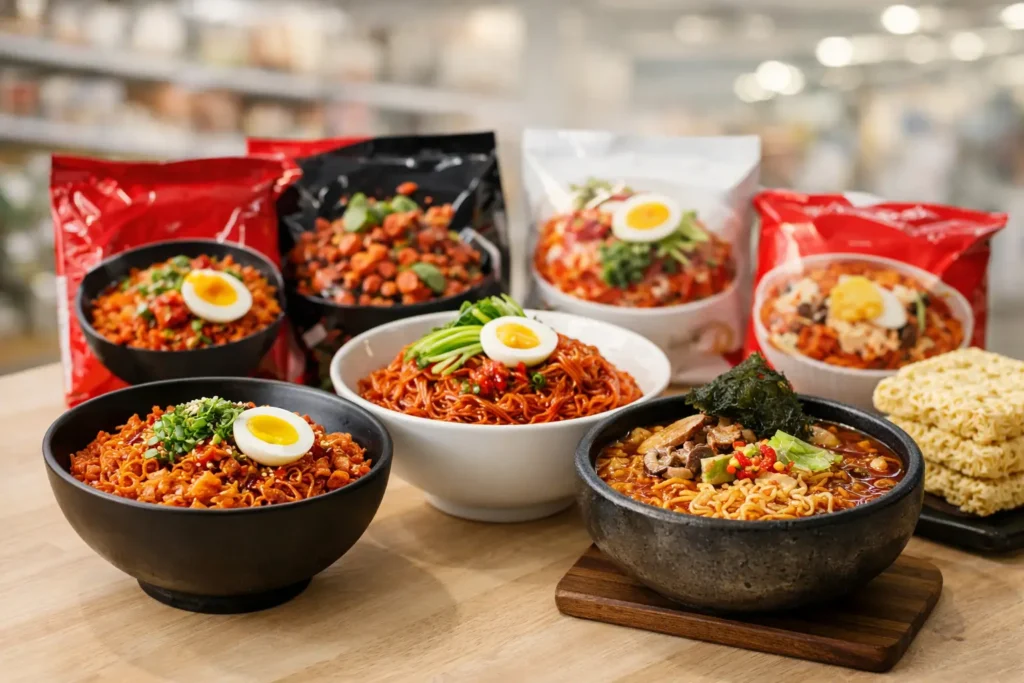
In wholesale, the strongest year-round Korean noodle sellers usually sit in four groups: classic spicy ramyun, carbonara-style hot chicken noodles, black bean noodles, and mild or soup-based staples with mainstream appeal. Within those groups, branded instant noodles with proven export demand tend to outperform novelty flavours.
The reason is simple. Buyers are not just sourcing products that attract first-time attention. They are sourcing noodles that support repeat orders, stable shelf velocity, and predictable replenishment cycles. A product can trend hard for eight weeks and still be the wrong long-term buy if demand drops sharply afterwards.
Year-round performers usually have a wider customer base. They sell to Korean food enthusiasts, but also to general shoppers who want a reliable meal option, younger consumers who buy by flavour familiarity, and foodservice operators looking for easy menu additions. That breadth matters more than hype.
The categories with the most stable demand
Hot chicken stir-fried noodles
Spicy stir-fried noodles remain one of the strongest Korean export categories. This is especially true for hot chicken ranges that have built global recognition. Their strength comes from two demand layers working at the same time: a core fan base that buys repeatedly, and a steady stream of new customers attracted by the brand’s reputation.
Not every spicy variant performs equally well all year. Extremely limited or niche flavours can be useful for promotional windows, but the consistent movers are usually the original hot chicken flavour and the creamier variants such as carbonara. These are familiar, highly recognisable, and easy for retailers to merchandise.
For buyers, the trade-off is clear. The hotter and more niche the flavour, the more it may depend on novelty-led sales. The more established the flavour profile, the more likely it is to support regular replenishment.
Classic Korean soup noodles
Traditional soup ramyun remains one of the safest categories for year-round sales because it serves everyday consumption. Consumers buy these noodles not only out of curiosity, but out of habit. That difference is commercially important.
Classic spicy beef-style, kimchi, seafood, and mild broth noodles tend to appeal to a wider age range than challenge-style products. They also work well across seasons. Buyers sometimes assume soup noodles slow in warmer months, but in many markets they continue to sell steadily because they are viewed as pantry staples rather than winter-only items.
For supermarket and wholesale channels, this category often provides the dependable base layer of volume. It may not always create the same buzz as hotter premium lines, but it often delivers the kind of repeat purchase pattern that supports long-term planning.
Black bean noodles
Jjajang-style instant noodles occupy a useful middle ground. They are distinctively Korean, but the flavour is generally accessible to customers who may not want extreme heat. That makes black bean noodles strong candidates for year-round listing, particularly in mixed demographic markets.
These noodles often perform well because they offer variety without becoming difficult to understand at shelf level. The flavour is familiar enough for repeat purchase once tried, and different enough to help broaden a Korean noodle range beyond standard spicy options.
From a wholesale point of view, black bean noodles can also reduce overreliance on one flavour direction. If your entire set is heat-driven, sales become more exposed to a narrower customer segment.
Mild and family-friendly noodles
One mistake buyers make is assuming Korean noodles must always be positioned around heat. In reality, mild and family-friendly products often carry strong year-round value because they open the category to children, cautious shoppers, and mainstream households.
These lines may not dominate online conversation, but they can support consistent turns in grocery and convenience retail. They also help create a fuller assortment, which is useful when retailers want Korean noodle fixtures that appeal beyond trend-led shoppers.
What makes a Korean noodle line sell all year?
Brand power matters, but it is not the only factor. Year-round Korean noodle sales are usually driven by a combination of demand familiarity, flavour accessibility, price positioning, and supply continuity.
Familiarity is a major one. When consumers know the pack, remember the flavour, and trust the eating experience, repeat purchase becomes much easier. This is why well-established Korean brands usually outperform unknown alternatives over time, even when the price point is higher.
Accessibility matters just as much. A very authentic product can still underperform if it is too niche for the market it enters. For example, an extremely hot flavour may do well in urban specialist retail but move more slowly in mainstream grocery. Buyers need to match product intensity to shopper profile.
Then there is operational reality. A noodle line cannot truly sell year round if supply is inconsistent. Stock gaps break momentum, disrupt retailer confidence, and hand space to competitors. For importers and distributors, dependable sourcing is not a back-office concern. It is part of the sales equation.
Choosing the right year-round mix by channel
The answer to which Korean noodles sell year round changes slightly depending on where they are sold.
In supermarkets, the best performers are usually recognisable, proven SKUs with broad flavour appeal. Buyers need packs that are easy to understand and capable of moving without intensive staff explanation. Original spicy, carbonara, classic soup noodles, and selected black bean lines are often the strongest fit.
In specialist Asian retail, the range can go deeper. Customers are often more open to stronger heat, less familiar flavours, and larger basket sizes. Year-round demand here can support both bestselling staples and secondary variants.
For foodservice, practicality becomes more important. Operators often look for noodles that can be served as-is or customised with protein, vegetables, egg, or cheese. Products with consistent flavour and preparation quality tend to work best. A foodservice buyer may prioritise versatility over shelf branding.
Online resale is different again. Trend-driven products can still do well, but repeat winners are the noodles that have name recognition and a proven fan base. Search demand, gifting appeal, and social visibility all help, yet reorder rate remains the more useful long-term measure.
Why trend products are not always year-round products
A lot of buyers first enter Korean noodles through trend demand, and that is understandable. Viral exposure can create fast turnover. But year-round success depends on what happens after the first wave.
The strongest wholesale strategy is usually a layered one. Use trend-led lines to pull attention, then anchor the category with proven staples that continue selling when online noise fades. If the range relies only on challenge-style heat or limited-edition curiosity, demand can become uneven.
This is where experienced sourcing matters. A trusted wholesale partner should help buyers distinguish between products that generate a burst of interest and products that support stable replenishment over the full year.
Planning stock with confidence
For importers, distributors, and retail buyers, the commercial question is not just which Korean noodles sell year round, but which ones can do so at the right margin and with dependable supply support. Products with consistent consumer pull are valuable, but only if procurement remains efficient and replenishment stays reliable.
That is why many buyers focus on established Korean noodle lines with strong export history, practical case volumes, and global recognition. In a wholesale setting, those factors reduce risk and make forecasting more manageable.
At SAMYANG FOODS STORE, the focus is on exactly that kind of dependable demand – authentic Korean noodles with proven market appeal, backed by bulk-only expertise and international fulfilment support for commercial buyers.
If you are building a Korean noodle range for long-term performance, start with the products customers already come back for. Viral sales are useful. Repeat sales are what build the category.
