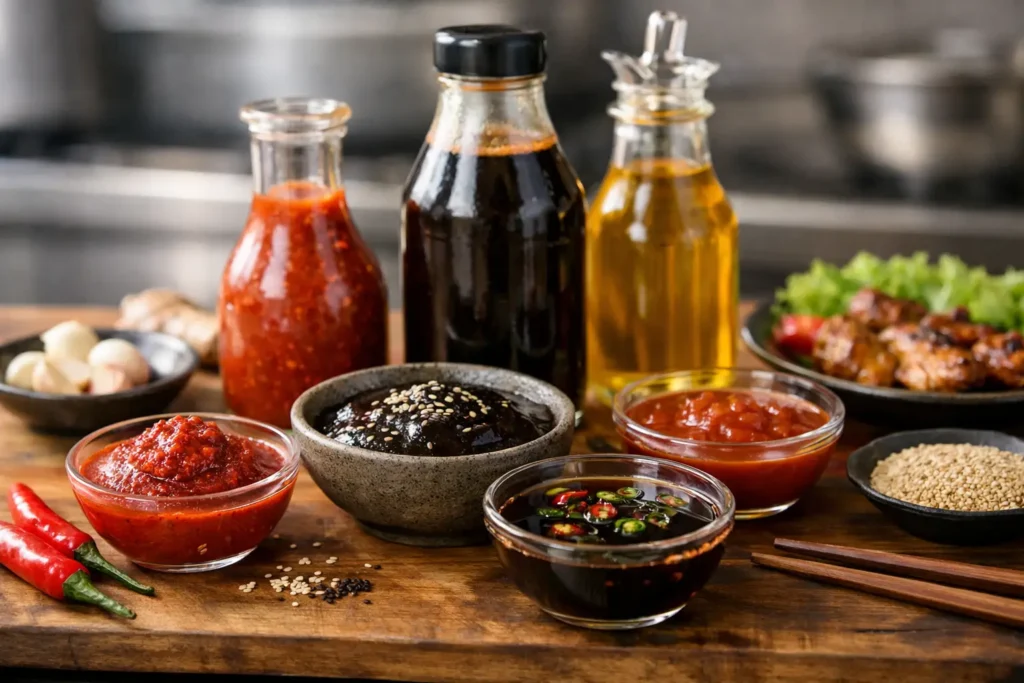
A Korean fried chicken glaze that holds well on delivery orders. A gochujang base that works across rice bowls, marinades and dips. A bulgogi sauce that saves prep time without flattening flavour. When buyers look for the best Korean sauces for restaurants, those are the decisions that matter – not just taste, but menu flexibility, consistency, labour savings and dependable supply.
For restaurant operators, the right sauce range can do more than support a Korean menu. It can help casual dining chains add a Korean special, allow street food concepts to build high-margin bowls, and give pub kitchens an easy route into proven flavour profiles. The commercial value comes from choosing sauces that travel well, scale easily and fit more than one dish.
What makes the best Korean sauces for restaurants?
In foodservice, a great sauce needs to perform under pressure. Authentic flavour matters, but so do portion control, holding stability and ease of use during a busy service. A sauce that tastes excellent in a sample pot but splits on hot food, burns too quickly on the grill or varies from batch to batch is not doing its job.
The best Korean sauces for restaurants usually share four traits. First, they deliver a recognisable Korean flavour profile. Second, they are versatile enough to work across multiple menu items. Third, they reduce kitchen labour compared with building every sauce from scratch. Fourth, they come from a supply chain that can support repeat ordering without disruption.
There is also a margin question. Some restaurants want premium, layered sauces for signature dishes. Others need dependable, cost-efficient products that can anchor a lunch offer or QSR menu. Neither approach is wrong. It depends on your concept, price point and customer expectations.
Core Korean sauces worth stocking
Gochujang
If you stock one Korean sauce base, gochujang is usually the place to start. This fermented red chilli paste brings heat, sweetness, savoury depth and colour. In a restaurant kitchen, it works far beyond traditional applications. It can be blended into dressings, stirred into stews, folded into mayo, used as a glaze for wings or mixed into marinades for pork and chicken.
Its strength is versatility, but that same strength requires control. Not every gochujang delivers the same heat level or sweetness. For operators, the best choice is often one with a balanced profile that can be adapted for a broad customer base rather than an extremely hot paste that limits menu use.
Bulgogi sauce and marinades
Bulgogi sauce is one of the easiest entry points for restaurants adding Korean flavours. Built around soy sauce, sweetness, garlic and fruit notes, it supports beef, chicken and even plant-based proteins. It also gives non-specialist kitchens a reliable route to a familiar Korean dish without heavy back-of-house development.
For commercial use, bulgogi sauce earns its place when it shortens prep and delivers repeatable results. The trade-off is that some products lean too sweet for certain markets, while others lack the savoury depth needed for premium menus. Buyers should assess not only flavour but how the sauce behaves in high-volume marination and cooking.
Korean fried chicken sauce
Demand for Korean fried chicken remains strong because it crosses cuisines easily. It works in dedicated Korean restaurants, takeaway concepts, pubs and dark kitchens. The sauce category is broader than one profile. Some versions are sweet and spicy, others soy-garlic forward, and some push harder on heat.
Restaurants should look for a glaze that coats evenly and keeps its shine without turning sticky or claggy in holding. Delivery and takeaway operators need to be especially careful here. A brilliant dine-in glaze may soften crust too quickly in closed packaging.
Ssamjang
Ssamjang is often overlooked outside specialist Korean settings, but it has real menu value. This thick, savoury paste, typically built from soybean paste and chilli paste, works well as a dip, lettuce wrap condiment or flavour booster in sauces and compound spreads.
It is less of a broad consumer crowd-pleaser than bulgogi or fried chicken sauce, so it may not belong on every menu. However, for restaurants building a more authentic Korean offer, it adds depth and helps differentiate from generic “Korean-style” concepts.
Soy-garlic Korean sauces
Soy-garlic profiles are commercially useful because they appeal to customers who want Korean flavour without high heat. That makes them a strong option for mixed audiences, family dining and chains testing Korean menu additions in mainstream locations.
These sauces also give kitchens more menu room. They can coat wings, finish stir-fries, glaze salmon or support rice and noodle bowls. In practical terms, they often deliver better broad-volume sales than hotter chilli-led options, even if the latter attract more attention on social media.
Choosing sauces by restaurant model
Quick service and takeaway
QSR and takeaway operators need speed, consistency and sauces that perform well in delivery. The priority is usually ready-to-use or easy-to-finish formats that reduce skilled prep. Korean fried chicken sauces, gochujang blends and soy-garlic glazes tend to be the strongest fit because they are easy to portion and familiar enough for fast customer uptake.
The key question is how many menu applications each product supports. If one sauce can cover wings, chicken bites, loaded fries and rice bowls, it improves stock efficiency and simplifies training.
Casual dining
Casual dining brands often need Korean sauces that feel authentic but remain accessible. Here, a small but effective range usually works best: a gochujang-based all-rounder, a bulgogi marinade, and one fried chicken or soy-garlic finishing sauce. That gives enough scope for starters, mains and limited-time offers without overcomplicating inventory.
Casual dining also needs flavour consistency across sites. Pre-developed sauces can support that better than house-made versions, particularly when labour turnover is high.
Korean specialist restaurants
Specialist operators typically require greater depth. They may want different grades of gochujang, stronger fermented notes, and sauces suited to traditional dishes rather than broad fusion use. In that case, authenticity should carry more weight than mass-market sweetness or simplified flavour.
Even here, convenience still matters. A specialist kitchen may make some signature sauces in-house while relying on trusted packaged bases for consistency and labour control. The issue is not whether a sauce is ready-made. The issue is whether it delivers the standard the menu promises.
What buyers should assess before ordering in bulk
Taste is only one part of the buying decision. Commercial buyers should look closely at pack size, shelf life, storage requirements and how easily a sauce integrates into existing kitchen systems. A brilliant product in an awkward format can slow service and increase waste.
Heat level is another practical consideration. Korean flavours are popular, but not every market wants the same spice intensity. For many operators, a balanced base with optional heat adjustment is safer than committing to an extreme profile from the start.
Ingredient transparency matters too, especially for chains and importers serving multiple accounts. Allergen handling, labelling clarity and batch consistency should be part of supplier evaluation from day one.
Then there is logistics. Restaurants and distributors need a partner that can support volume planning, repeat orders and cross-border fulfilment without avoidable delays. This is where wholesale-only expertise becomes valuable. For buyers sourcing authentic Korean pantry lines at scale, a supplier with direct category knowledge and international operational support can reduce friction across the entire procurement cycle. That is particularly relevant when building menus around products that need stable, ongoing availability rather than one-off purchases.
How to build a commercially strong sauce range
Most restaurants do not need ten Korean sauces. They need the right three to five. A practical starting range might include a gochujang base, a bulgogi marinade, a Korean fried chicken glaze and a soy-garlic option. That combination covers grilled proteins, bowls, fried items, dipping sauces and limited-time specials.
From there, range expansion should follow sales data, not just trend chasing. If spicy products move well, add a stronger chilli-forward line. If mainstream guests prefer milder flavours, build around soy-garlic and sweet-savoury profiles first. A tighter range with high repeat use is usually more profitable than a broad range with slow turnover.
For importers, wholesalers and multi-site operators, the strongest sauce programme is the one that balances authenticity with operational reality. That means products customers recognise, formats kitchens can use quickly, and supply that remains dependable when demand grows.
Korean food continues to win menu space because it offers bold flavour with real commercial flexibility. The right sauces make that opportunity easier to scale – and the best ones do not just taste Korean, they work hard enough to earn their place on every reorder.
