A buyer does not need another trend report to see what is moving. They can see it in repeat orders, shelf turnover and menu demand. Wholesale Korean pantry products have shifted from niche Asian grocery lines into core commercial categories, and that changes how importers, retailers and foodservice operators should buy.
The opportunity is clear, but so is the risk of buying badly. Korean food performs best when the range is built around proven products, authentic sourcing and dependable fulfilment. If the supply base is inconsistent, even high-demand items become difficult to scale.
Why wholesale Korean pantry products matter for commercial buyers
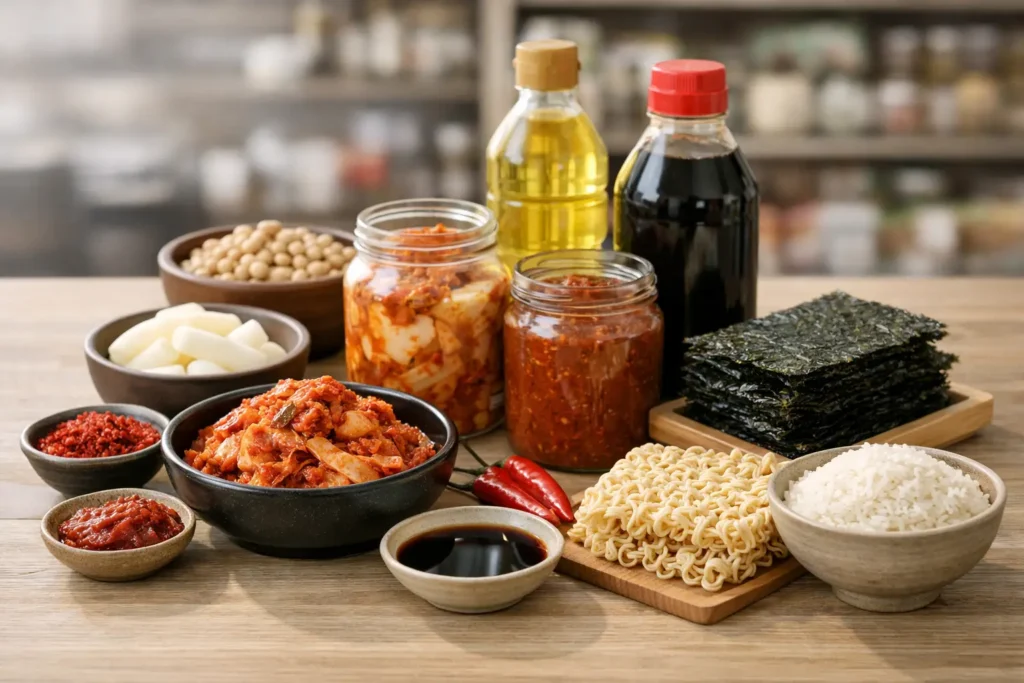
Korean pantry lines are not driven by curiosity alone any more. They are supported by established consumer familiarity, especially in instant noodles, hot chicken flavours, gochujang-based sauces, snack lines and easy meal formats. For a supermarket buyer, that means stronger shelf confidence. For a distributor, it means a category with room for repeat replenishment rather than one-off novelty purchasing.
The commercial appeal is especially strong in products with clear brand recognition. Samyang Ramen and Buldak Bokkeum Myeon have become high-velocity items in many markets because consumers already know what they are looking for. That reduces the education burden at point of sale and helps buyers move stock more efficiently.
There is also a margin story here. Pantry products generally offer longer shelf life, easier storage and more predictable handling than chilled or short-code lines. That makes them practical for international trade, wholesale consolidation and multi-channel resale. Retailers can build branded sections, wholesalers can broaden their Korean assortment, and foodservice operators can add retail-ready items alongside menu applications.
What buyers should include in a wholesale Korean pantry products range
A strong range should not try to cover every Korean SKU available. It should focus on products with established demand, operational practicality and cross-channel relevance. In most cases, that means building around a few core categories and expanding with purpose.
Instant noodles and ramen
This is often the entry point and, in many markets, still the volume driver. Buyers are looking for recognised flavours, strong branding and formats that suit supermarkets, convenience, wholesale clubs and online resellers. Spicy lines perform well, but milder variants still matter depending on the customer base. The right mix depends on whether the buyer is serving mainstream retail, specialist Asian grocery or foodservice resale.
Sauces and seasonings
Korean sauces are no longer limited to specialist shoppers. Gochujang, hot chicken sauce, marinades and seasoning bases have become useful crossover products because they fit both home cooking and commercial kitchens. For foodservice buyers, they support menu development. For retail, they encourage basket growth from consumers already buying noodles or snacks.
Snacks and ready-to-eat products
Snacks give the range impulse strength, while ready-to-eat meals provide convenience-led growth. These products can be effective for stores targeting younger consumers, urban footfall or trend-led international food sections. That said, demand can be more seasonal or market-specific than staple noodles and sauces, so volume planning matters.
What separates a good supplier from a risky one
In this category, product demand alone is not enough. Buyers need a supply partner that can protect continuity, authenticity and operational timing. The difference between a profitable line and a costly headache often comes down to execution.
Authenticity should be non-negotiable. Commercial buyers need confidence that branded Korean pantry products are genuine, correctly handled and suitable for international wholesale channels. If the origin is unclear or the supply chain is too fragmented, the buyer takes on unnecessary risk.
Fulfilment reliability matters just as much. A supplier may offer attractive pricing, but if lead times slip, export paperwork stalls or pallet quantities are inconsistent, the savings disappear quickly. Retailers cannot leave gaps on shelf. Distributors cannot promise stock and then explain delays to their own customers. Foodservice operators cannot redesign menu plans around missed deliveries.
This is why serious buyers look beyond headline cost. They evaluate whether the supplier understands bulk-only trading, export coordination, repeat-order planning and account support. A trusted global partner should be able to support scale, not simply process a one-off order.
The role of logistics in wholesale Korean pantry products
For international buyers, logistics is not a back-office detail. It is part of the buying decision. Korean pantry products are well suited to export, but that does not remove the need for careful coordination around packing, transit schedules, documentation and destination requirements.
The best suppliers treat logistics support as part of the service, not an afterthought. That includes clear communication on lead times, order volumes, shipping options and delivery expectations. Buyers want to know what can ship now, what needs planning and how replenishment cycles should be managed.
There is also a practical trade-off between range depth and supply efficiency. A broader assortment can strengthen market appeal, but too many low-volume SKUs can complicate freight planning and tie up working capital. Experienced wholesale buyers often start with proven fast movers, establish reorder patterns and then expand selectively.
A cross-border operating footprint adds confidence here. When a supplier understands both origin-side coordination and destination-side commercial requirements, execution tends to be stronger. That is particularly valuable for importers and distributors building long-term programmes rather than testing isolated shipments.
How retailers and distributors should approach demand
The strongest buying decisions are based on demand visibility, not assumptions. Korean pantry products sell for different reasons across different channels, and the range should reflect that reality.
In supermarkets, recognised branded noodles and sauces often lead because they are easy for shoppers to understand and repurchase. In specialist stores, the opportunity may be wider, with stronger acceptance of bolder flavours and more niche SKUs. In foodservice, versatility matters more. Buyers may want pantry lines that work both as resale products and as ingredients for menu use.
It also helps to distinguish between social media demand and dependable demand. Viral products can create short bursts of sales, but not every trend converts into a stable wholesale line. Commercial buyers should ask whether the product has repeat purchase strength, not just online visibility. Proven Korean brands tend to perform better over time because they combine recognition with consumer trust.
Why direct sourcing matters in this category
Direct sourcing claims are easy to make and harder to verify through performance. In Korean food wholesale, direct sourcing matters because it supports consistency, clearer product access and stronger confidence in authenticity. It can also help buyers secure high-demand lines that are harder to source reliably through indirect channels.
For a commercial buyer, the benefit is practical rather than theoretical. Better sourcing usually means fewer surprises around product variation, availability and continuity. It gives buyers a firmer foundation for planning promotions, expanding assortments and serving repeat customers without disruption.
This is one reason businesses such as SAMYANG FOODS STORE position themselves around bulk-only expertise and genuine Korean product access. For buyers scaling a category, that kind of focus is more useful than a broad catalogue with weak operational control.
Choosing a wholesale partner for long-term growth
A buyer should be able to ask simple questions and get clear commercial answers. Which Korean pantry products are moving best by channel? What are the practical MOQ expectations? Which categories are easiest to scale internationally? How should a first order be structured to reduce risk and support reordering?
The right supplier will answer with market awareness and operational clarity, not vague promises. They will understand that a distributor needs continuity, a supermarket needs shelf-ready reliability and a foodservice operator needs flexibility within a disciplined supply model.
Wholesale Korean pantry products continue to offer real growth potential, but success comes from disciplined buying. Start with authentic, high-demand lines. Build with a supplier that can fulfil consistently across borders. Then expand the range once the sales pattern proves itself. In this category, dependable execution is what turns demand into a business that lasts.

Pingback: Choosing an Authentic Korean Food Exporter – SAMYANG FOODS STORE
Pingback: Samyang Carbonara Review for Retailers – SAMYANG FOODS STORE